
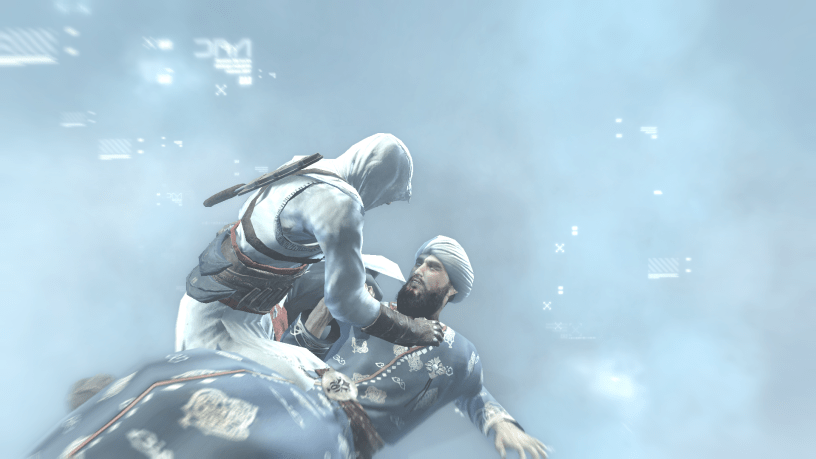
Before it became a global powerhouse, Assassin’s Creed was a bold experiment—an open-world stealth-action game set in the Crusades-era Holy Land, where you play as a hooded assassin scaling rooftops and eliminating targets with surgical precision. It was nothing short of revolutionary in 2007, and while it laid a rock-solid foundation for one of gaming’s most successful franchises, it didn’t escape its fair share of flaws.
From the very first moments, there was a sense of awe. The setting—cities like Jerusalem, Acre, and Damascus—felt alive and historically grounded. Climbing tall towers to unlock parts of the map, leaping across rooftops, blending with crowds, and silently taking down enemies was unlike anything most players had experienced at the time. The freedom of movement and the satisfaction of pulling off the perfect kill were unmatched.
A Conspiracy Through the Ages
You play as Altaïr, a member of the Assassin Brotherhood during the Third Crusade. His mission? Eliminate key figures to bring order to chaos. But the deeper he goes, the more he uncovers a grander conspiracy—a story that would eventually stretch across centuries and multiple games. Alongside this, there’s the sci-fi twist: Desmond Miles, a modern-day bartender forced to relive his ancestor’s memories through a machine called the Animus.
The game’s dual narrative was ambitious and unique, teasing a bigger universe that made players eager to see where the story would go next. It wasn’t just about history—it was about secrets, power, and a hidden war between Assassins and Templars.
Gameplay That Dazzled—Then Dragged
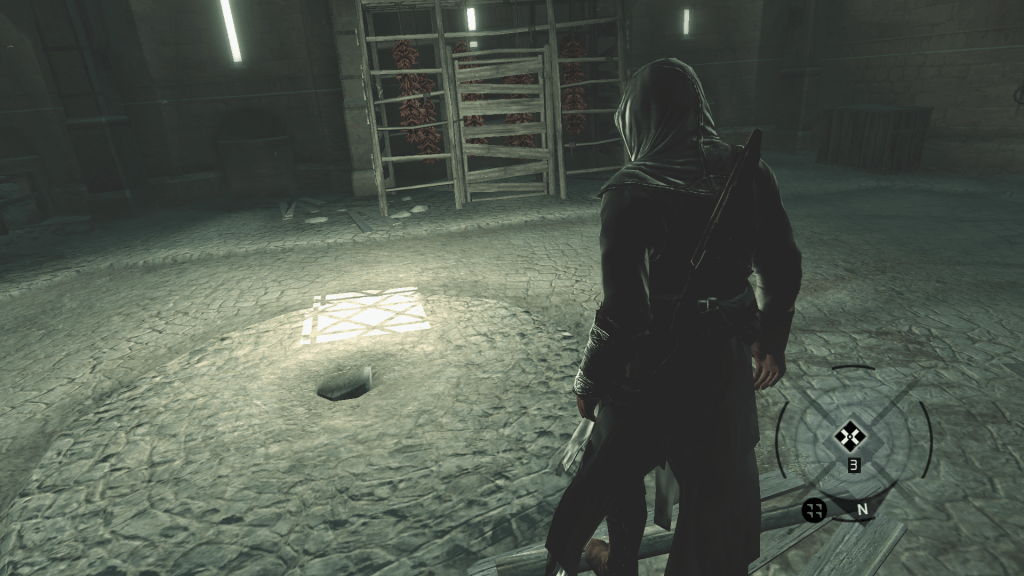
Assassin’s Creed delivered some of the most innovative mechanics of its time. The parkour system was fluid, the assassinations felt impactful, and the stealth gameplay was a breath of fresh air. But as the hours passed, repetition began to set in. Most missions followed a similar formula: investigate, eavesdrop, pickpocket, assassinate, repeat. There was little variation, and the thrill of those first few hours started to fade.
Then there were the glitches—lots of them. While not game-breaking for everyone, they were frequent enough to be frustrating, and many of them still exist in current versions on PC and consoles. It’s a reminder of the game’s early open-world ambition and the technical limitations of the time.
The Legacy That Endures
What keeps Assassin’s Creed relevant today isn’t just what it was—it’s what it became. This first entry sparked a franchise that would evolve, experiment, and expand in incredible ways. While the original may feel rough around the edges now, there’s no denying its influence or the spark it ignited.
Final Verdict
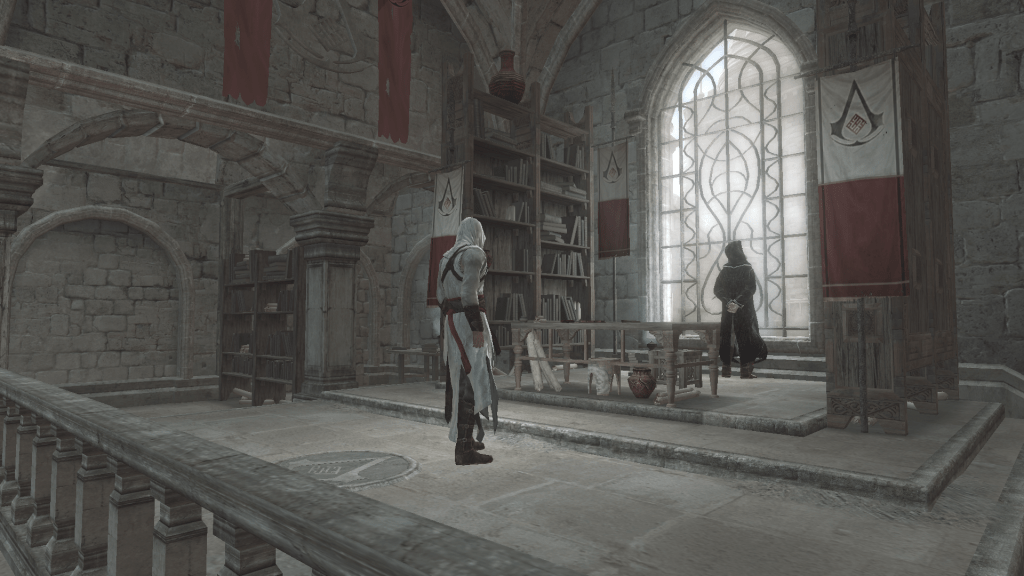
Assassin’s Creed was a game-changer. Its story, world-building, and gameplay introduced a new kind of open-world experience that captured players’ imaginations. While it suffers from repetitive structure and persistent technical issues, its impact on the industry is undeniable. It’s not perfect—but it’s important.
Rating: 4/5
Pros:
- Groundbreaking stealth and parkour mechanics
- Immersive historical setting
- Ambitious dual-narrative that set the stage for future titles
Cons:
- Repetitive mission structure
- Persistent glitches, even in modern versions
- Shallow progression and limited mission variety
For longtime fans or newcomers curious about where it all began, Assassin’s Creed remains a must-play—even if time has made some of its flaws harder to ignore.
 MaximusGames99