
Introduction
For the first time in a while, AMD has delivered an exciting keynote, unveiling their latest GPUs: the Radeon RX 9070 and 9070 XT. Alongside their announcement, AMD made direct comparisons to NVIDIA’s RTX 5070 and 5070 Ti, sparking a new wave of competition in the GPU market. But do these new Radeon cards live up to the hype? Let’s break down the numbers from the presentation and see how they stack up.
9070 & 9070 XT – Specs Breakdown
9070XT
9070
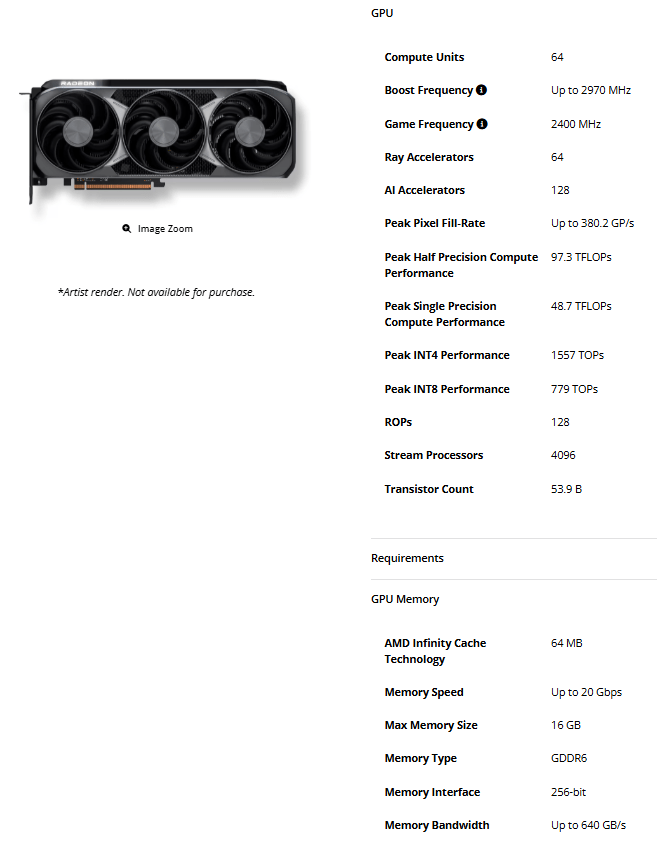
9070 XT GPU – high-speed performance, advanced architecture, and cutting-edge features.
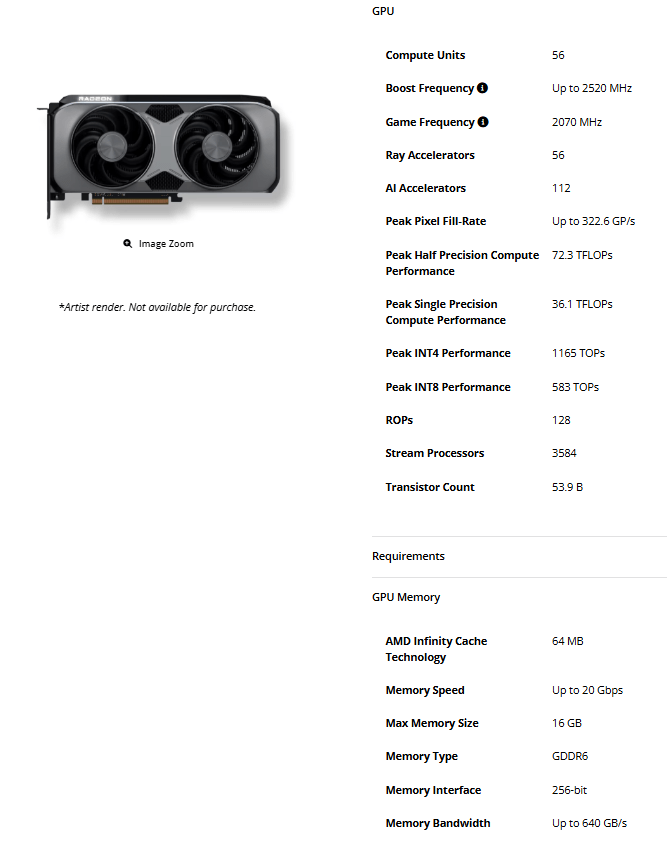
The Radeon RX 9070 XT boasts high-speed performance, an advanced architecture, and cutting-edge gaming features. Meanwhile, the Radeon RX 9070 offers powerful performance for next-gen gaming, making it a strong contender against NVIDIA’s mid-range options.
Understanding the differences between AMD and NVIDIA’s architectures is crucial when comparing their GPUs. The key aspects we’ll be focusing on include:
- CUDA Cores vs. Stream Processors
- Memory Interface Width
- Base Clock Speed
- VRAM Capacity
- Memory Type & Bandwidth
These specs alone don’t tell the full story, as both brands use different architectures. However, they provide a good starting point when evaluating performance and value.
AMD vs. NVIDIA – Key Differences
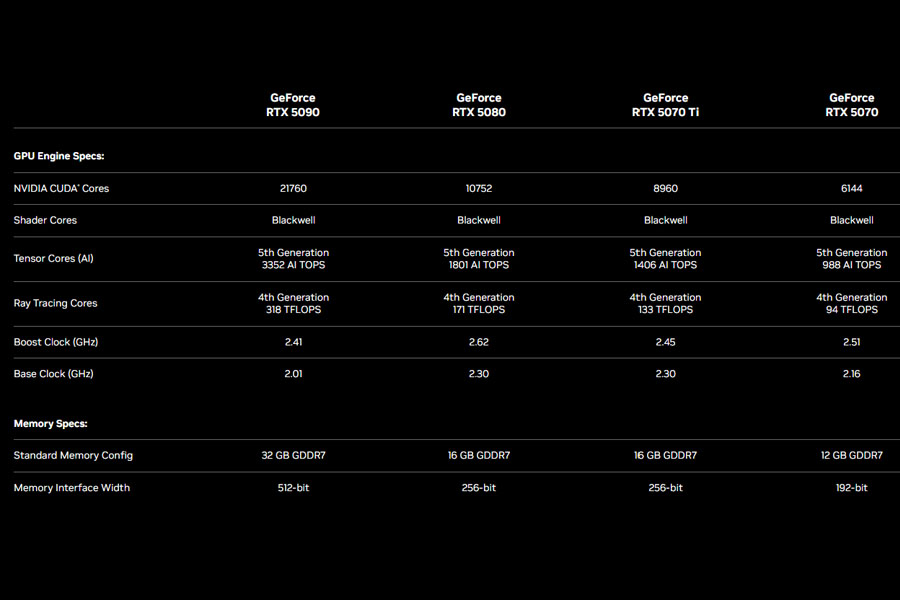
One of the biggest differences between AMD and NVIDIA GPUs is how they process graphics. While NVIDIA uses CUDA Cores, AMD relies on Stream Processors. However, the number of cores alone doesn’t determine performance – memory bandwidth and efficiency play an equally important role.
- Memory Interface Width & Bandwidth: The 9070 XT features a 256-bit memory interface, which determines how much data can be transferred at once. When paired with GDDR7 memory, it can achieve speeds of up to 40GB/s, compared to 20GB/s with GDDR6. This leads to better overall performance, especially in memory-intensive applications.
- VRAM & Future-Proofing: Both the 9070 XT and 5070 Ti come with 16GB of VRAM, while the standard 5070 is limited to 12GB. With modern games demanding more VRAM, the RX 9070 XT appears to be a more future-proof option.
- Clock Speeds: The RTX 5070 Ti has a slightly higher base clock than the 9070 XT, but the 9070 XT beats it by nearly 100MHz in boost clock speeds, which can make a difference in gaming performance.
At first glance, NVIDIA seems like the obvious choice, but let’s take a closer look at real-world gaming performance before jumping to conclusions.
Performance Showdown – 9070 XT vs. 5070 Ti
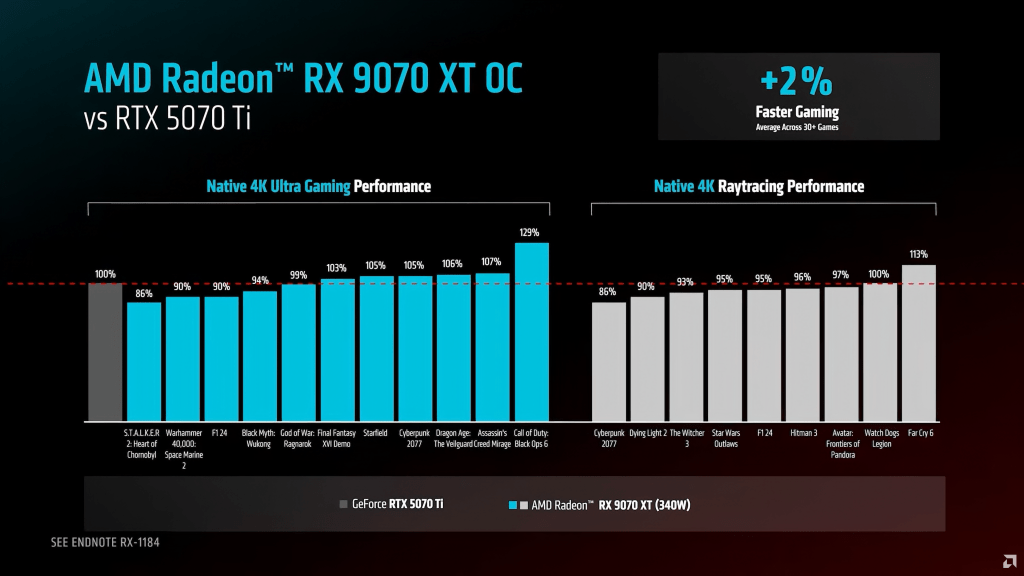
Now for the most important aspect: gaming performance. The RX 9070 XT performs better in certain titles at native resolutions but falls slightly behind in ray tracing performance at 4K.
As a gamer who enjoys the latest releases, I prioritize performance in demanding titles over having the best possible graphics settings. In AMD’s benchmarks, the 9070 XT OC version matches or exceeds the 5070 Ti’s performance in many games, even without the use of DLSS or FSR.
If ray tracing is your priority, NVIDIA holds a slight advantage. However, if raw performance, FPS, and longevity matter more, AMD’s offering is a serious contender.
Gaming Performance Per Dollar – The Deciding Factor?
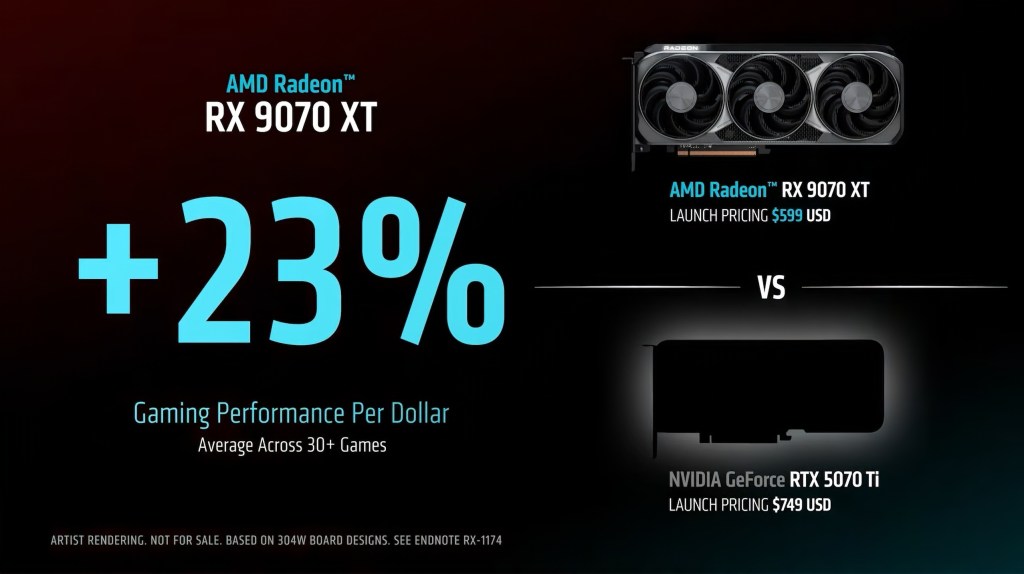
One of the biggest selling points of the RX 9070 XT is its price-to-performance ratio.
- RX 9070 XT: $599
- RTX 5070 Ti: $749
That’s a $150 difference, and according to AMD’s presentation, the 9070 XT offers 23% better gaming performance per dollar compared to the 5070 Ti.
While the RTX 5070 Ti might be slightly better in certain benchmarks, the price gap makes the 9070 XT a very tempting option. However, real-world independent benchmarks will be crucial before we can say for certain which GPU offers better value.
Final Thoughts – Is the 9070 XT the Better Choice?
This is an exciting comparison, but before we declare a winner, we’ll need to wait for third-party benchmarks to confirm AMD’s claims. If gaming performance is your main priority and you don’t mind sacrificing a bit of ray tracing performance, the RX 9070 XT looks like an excellent deal.
However, there’s another cost to consider – your monitor. If you’re upgrading to 4K gaming, you’ll need a high-quality 4K monitor, which can range from $500 to $1000. Personally, I’m considering the RX 9070 XT, not just because of the GPU itself, but because it allows me to invest in a high-refresh 1440p monitor ($200-$300) instead of a more expensive 4K setup.
For now, I’m leaning toward team red, but I want to hear from you! Are you going with Team Green or Team Red? Let me know in the comments!
 MaximusGames99